Experience
Sewage Backup Cleanup in San Jose
Sewage Backup Cleanup removes sewage-contaminated water, solid waste, and associated contaminants from occupied spaces and restores sanitary conditions so you can safely reoccupy the property. If you are dealing with raw sewage in your home or business in San Jose, CA, quick containment, removal, and thorough sanitation reduce health risks, limit property damage, and speed recovery.
Sewage backups introduce biological hazards and often require specialized equipment and trained intervention. Emergency Sewage Cleanup, Sanitation and Decontamination Services focus on risk reduction, debris removal, surface sanitation, and moisture control to prevent ongoing structural damage and microbial growth. This page explains what the service includes, when to call for professional help, how the cleanup typically proceeds, what affects cost and duration, and what you should ask and prepare for when arranging service in San Jose, CA.
What does Sewage Backup Cleanup involve?
Sewage Backup Cleanup involves removing sewage-contaminated materials, disinfecting affected surfaces, and drying the area to prevent secondary damage. Professionals remove standing sewage, extract contaminated water, and isolate the affected area to limit cross-contamination.
After removal, technicians clean and sanitize hard surfaces with EPA-registered disinfectants or industry-accepted biocides and perform antimicrobial treatments on porous materials when appropriate. They also search for hidden contamination in wall cavities, under flooring, and inside HVAC components, and recommend material removal when decontamination is not feasible.
Final steps include moisture control, via drying equipment, and verification through moisture meters and visual inspection. Documentation of work performed and recommendations for repairs or further remediation are common deliverables.
Who needs Sewage Backup Cleanup?
Anyone with sewage in living or working spaces needs Sewage Backup Cleanup because raw sewage contains bacteria, viruses, and other biological contaminants that pose health hazards. Properties that experience sewer main backups, clogged drain lines, or septic system failures commonly require professional cleanup.
Commercial properties with public traffic, childcare centers, healthcare facilities, and multi-family buildings should treat sewage exposure as an immediate sanitation priority to protect occupants and reduce liability. Homeowners and landlords also need cleanup services to prevent structural damage and mold growth after a sewage event.
Emergency Sewage Cleanup, Sanitation and Decontamination Services are appropriate when raw sewage contacts finished surfaces, structural components, or mechanical systems that cannot be safely sanitized by occupants alone.
When should you schedule Sewage Backup Cleanup in San Jose, CA?
Schedule Sewage Backup Cleanup as soon as it is safe to do so after a sewage incident because prompt action limits contamination spread and secondary damage. If sewage is present in living areas, basements, or mechanical rooms, delay increases the likelihood of material removal and longer drying times.
Call for emergency services whenever standing sewage exceeds what you can safely remove with household tools, when sewage has entered HVAC systems, or when occupants include young children, elderly adults, or people with compromised immune systems. Local service availability and weather or access conditions in San Jose, CA may affect response time, so contact a provider promptly to discuss options.
If there is any electrical risk, structural instability, or ongoing sewage inflow, do not enter the space; notify the cleanup provider and relevant utility or municipal authorities as appropriate.
How does the Sewage Backup Cleanup process work?
A professional Sewage Backup Cleanup typically follows a clear sequence to assess, contain, remove, and restore:
- Initial contact and triage: You describe the situation; the provider assesses urgency and can give immediate safety guidance.
- On-site assessment: Technicians inspect affected areas, identify sewage source and pathways, and determine contamination extent.
- Scope identification: The team documents the affected materials, evaluates salvageability, and estimates labor, equipment, and disposal needs.
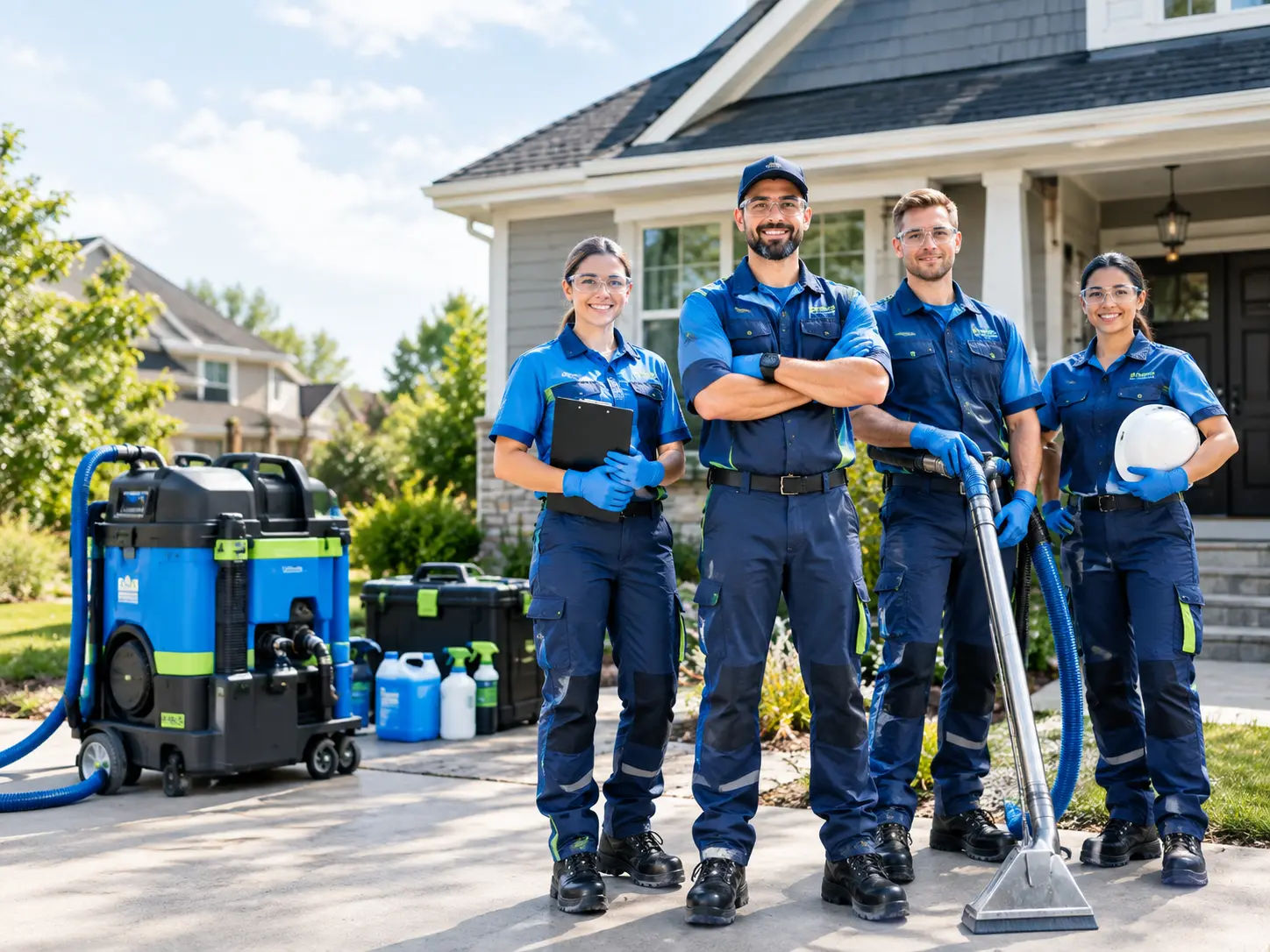
- Preparation and containment: Workers set up containment barriers, negative-air or air-cleaning systems, and required personal protective equipment (PPE).
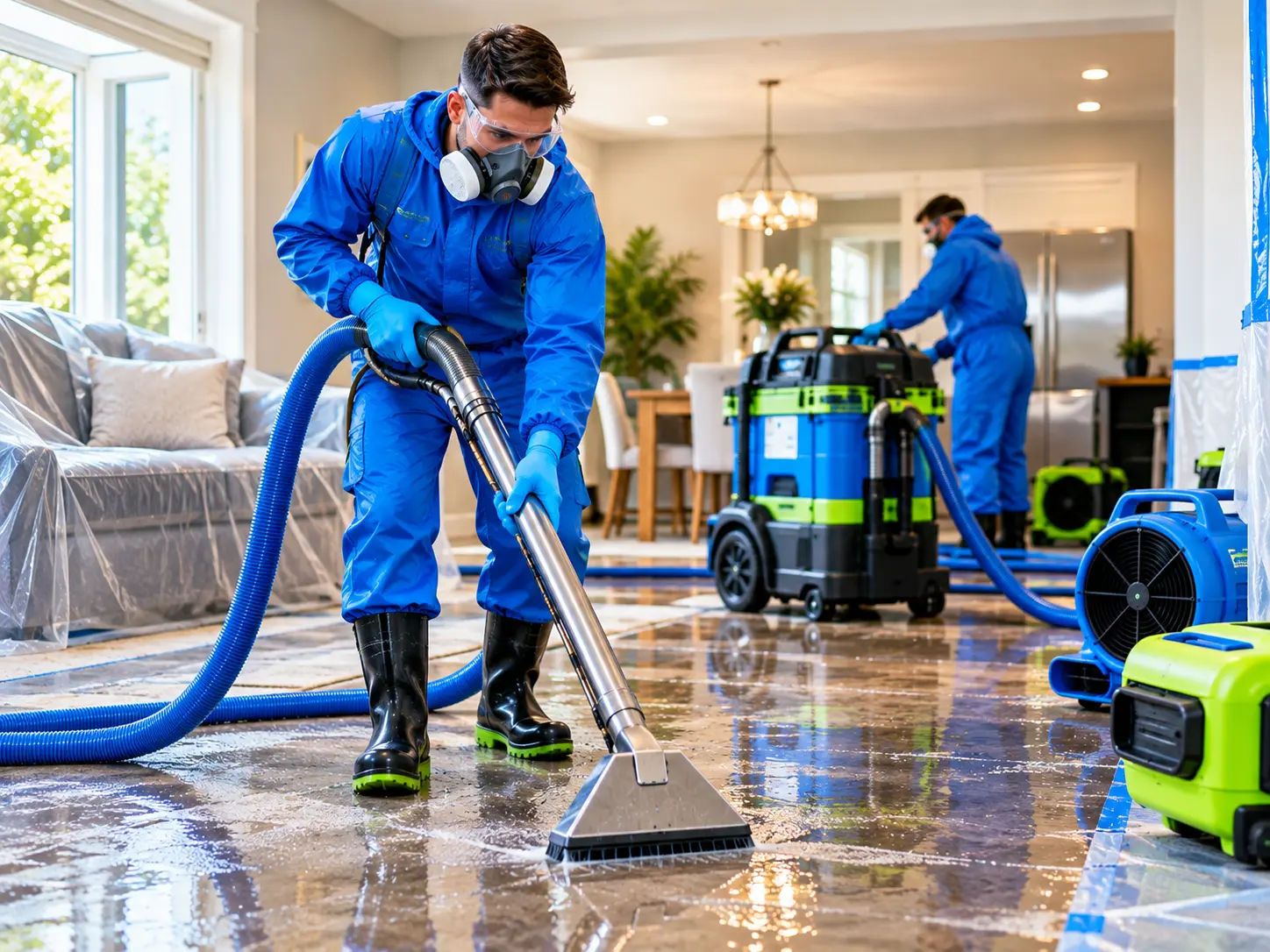
- Service execution: Removal of standing sewage and contaminated materials, surface cleaning, sanitation, and targeted demolition when needed.
- Drying and dehumidification: Application of forced air movers and dehumidifiers until moisture targets are met.
- Inspection and validation: Moisture readings and visual checks verify that key areas are dry and sanitized enough for repair.
- Completion and follow-up: Providers deliver written reports, disposal receipts, and recommendations for repairs or preventative maintenance.
Each step focuses on reducing biological risk, preventing migration of contaminants, and preparing the property for safe restoration or repair.
What safety precautions apply during sewage cleanup?
Safety is primary because sewage contains pathogens and can create slip, electrical, and chemical hazards. Technicians use appropriate PPE, including gloves, impermeable suits, eye protection, and respirators when airborne contamination is possible.
Electricity presents a serious hazard where water contacts outlets, appliances, or electrical systems; professionals coordinate with electricians or utility teams to de-energize circuits when necessary. Workers also follow safe waste-handling and disposal practices to avoid cross-contamination.
Patients, pets, and non-essential visitors should be kept away from the affected area. Property owners should avoid using HVAC systems that could distribute airborne contaminants until an inspection confirms ductwork cleanliness.
What equipment and materials are used for Sewage Backup Cleanup?
Sewage Backup Cleanup uses a combination of extraction, cleaning, and drying equipment to remove contamination and restore safe conditions. Typical equipment includes:
- Submersible and truck-mounted pumps for large volumes of sewage.
- High-capacity extractors and wet vacuums for standing water removal.
- HEPA-filter air scrubbers and negative-air machines to control airborne particulates.
- Air movers and low-grain refrigerant or desiccant dehumidifiers for moisture control.
- Moisture meters and infrared cameras to detect hidden moisture.
- EPA-registered disinfectants, detergents, and antimicrobial agents for sanitation.
- Controlled demolition tools for removal of unsalvageable porous materials.
Proper selection and use of these tools depend on contamination category, affected materials, and access constraints.
What factors affect Sewage Backup Cleanup scope and duration?
The scope and duration of cleanup depend on the type of sewage, volume, affected materials, and property layout. Sewage categories—clean water backups vs. contaminated or black water—affect the level of sanitation required and whether porous materials must be removed.
Factors that influence time and effort include: - Amount of standing sewage and how long it sat before cleanup. - Whether sewage infiltrated wall cavities, subfloors, or HVAC systems. - Accessibility to affected areas for equipment placement. - Structural damage that requires temporary shoring or demolition. - Weather and local service availability in San Jose, CA.
Professionals assess these variables on-site and typically explain how each factor affects the estimated timeline and recommended remediation steps.
What should customers expect from Sewage Backup Cleanup in San Jose, CA?
Customers should expect a safety-first approach, transparent communication about scope, and documentation of work. Technicians will identify and address immediate hazards, remove sewage and unsalvageable materials, and perform sanitation and drying operations.
Expect written scope descriptions and explanations of why certain materials require removal versus cleaning. After active cleanup, you should receive verification such as moisture readings and a summary of sanitation methods used. Providers often advise on repairs and follow-up actions required before reoccupancy or cosmetic restoration.
When scheduling, ask about local permitting or municipal requirements in San Jose, CA that may apply to sewage disposal or demolition.
How do property conditions affect required work?
Property conditions directly influence what cleanup actions are necessary. Porous materials like carpet, padding, drywall, and insulation often trap contaminants and may need removal. Hard, non-porous surfaces are more likely to be sanitized in place.
Older buildings with hidden voids, multilayer flooring, or compromised vapor barriers increase the difficulty of verifying decontamination. Similarly, properties with finished basements, built-in cabinetry, or integrated mechanical systems may need additional access work to inspect and clean affected components.
Technicians evaluate material construction, moisture migration patterns, and the potential for microbial regrowth to determine the most effective and practical remediation strategy.
What preparation should customers do before cleanup professionals arrive?
Before professionals arrive, prioritize safety and access. Turn off HVAC systems and avoid entering contaminated areas. If safe and possible, remove pets and people from the property and shut off electricity to the affected zone if instructed.
Provide clear information about the source of the backup, how long sewage has been present, any previous attempts to remove water, and where main shutoffs and access points are located. Gather property documentation that might help technicians, such as floor plans or utility maps.
Avoid attempting chemical disinfection or mixing cleaning agents, as improper combinations can be hazardous. Leave sewage handling and heavy equipment operation to trained teams.
How is sanitation and decontamination verified?
Sanitation and decontamination are verified through visual inspection, moisture measurement, and, when appropriate, surface testing or clearance testing for microbial presence. Professionals use moisture meters to confirm that structural elements have reached acceptable dryness levels.
Visual checks ensure there is no remaining visible contamination, staining, or residue. In higher-risk settings or upon customer request, air and surface samples can be taken and analyzed by third-party labs to document microbial counts, though this step is not always necessary for routine sewage cleanup.
Documentation typically includes photographs, measurement logs, and a written summary of methods and products used.
What maintenance follows Sewage Backup Cleanup?
Maintenance after sewage cleanup focuses on preventing recurrence and monitoring recovery. Recommended actions often include fixing the sewage source, clearing drains, installing backflow prevention or check valves where appropriate, and scheduling regular plumbing inspections.
Monitor repaired areas for odors, staining, or moisture reappearance for several weeks. In some cases, replacement of permanently damaged components (flooring, drywall, insulation) is necessary to restore full functionality and aesthetics.
Regular maintenance of sump pumps, sewer lines, and gutters reduces the likelihood of future backups. Providers can offer follow-up inspections to ensure repairs and drying remained effective.
What factors influence cost and how will pricing be determined?
Cost depends on contamination extent, materials removed, access difficulty, required equipment, disposal needs, and labor intensity. Properties requiring demolition of walls, replacement of flooring, or HVAC cleaning will incur higher costs than surface sanitation alone.
Providers typically assess the site and provide an estimate that outlines the scope, materials to be removed, and any recommended reconstruction or repairs. Insurance coverage can affect out-of-pocket expense, but policies and claim processes vary; document damage thoroughly with photos and keep records of all communications.
Because individual conditions vary widely, an on-site assessment is necessary to produce a reliable estimate.
What questions should you ask a Sewage Backup Cleanup provider?
Ask specific operational and safety questions to evaluate a provider’s approach and to support decision-making: - What is your process for containing and preventing cross-contamination? - Which disinfectants and cleaning agents do you use, and are they appropriate for sewage contaminants? - How do you handle demolition and disposal of contaminated materials? - What moisture and sanitation verification methods do you use? - Will you coordinate with insurers, plumbers, or electricians if needed? - What timelines do you expect for cleanup and for re-occupancy? - Can you provide a written scope and post-service documentation?
Clear answers will help you understand the provider’s practices and set expectations about outcomes and timelines.
When is professional help necessary rather than DIY cleanup?
Professional assistance is necessary when raw sewage covers more than a small, easily contained area, when sewage has entered HVAC systems, when contamination includes structural cavities, or when occupants have health vulnerabilities. Professionals are also essential when electrical hazards, structural damage, or ongoing sewage inflow exist.
DIY attempts risk improper sanitation, incomplete removal of contaminants, and exposure to hazardous pathogens. Professionals bring specialized equipment and training to verify finishing conditions and to reduce the chance of persistent odors, staining, or biological regrowth.
What regulatory or public health guidance applies to sewage cleanup?
Public health authorities recommend treating raw sewage as a biohazard because it can contain disease-causing microorganisms. Agency guidance typically emphasizes containment, use of PPE, proper disinfectants, and safe disposal methods.
Local municipal regulations may also govern sewage disposal and certain types of demolition or reconstruction after contamination. Discuss local service requirements in San Jose, CA with your provider to ensure compliance and to handle any necessary permits or notifications.
What are common misconceptions about Sewage Backup Cleanup?
A common misconception is that visible cleaning alone removes all hazards; however, sanitation often requires specific disinfectants and moisture control to prevent microbial regrowth. Another misconception is that porous materials can always be cleaned; in many sewage events, porous materials are irreversibly contaminated and must be removed to ensure safety.
People also underestimate how quickly microbial growth can begin after a sewage incident; timely professional action reduces long-term repair needs and health risks.
How long does Sewage Backup Cleanup typically take?
Duration varies by severity, access, and drying needs. Active removal and sanitation may be completed within a day for limited events, while drying, verification, and any necessary demolitions can extend the project to several days or longer. Moisture goals and reconstructive work commonly determine the overall timeframe.
Technicians will provide an estimated schedule after on-site assessment and will update it if hidden conditions or additional contamination are discovered.
Where can customers find documentation or proof of completed work?
Providers usually supply written reports, photographs, moisture readings, and disposal receipts as proof of completed work. These documents support insurance claims and verify that sanitation and drying goals were met.
If third-party testing was performed, lab reports can be included. Request these documents during scheduling so you know what files will be provided at completion.
What questions should you be ready to answer when contacting a provider?
When you call, be ready to describe the location of the backup within the property, the approximate volume and duration of exposure, any attempts at removal, the property type (residential, commercial), and any occupants with health concerns. Also note whether electricity remains on and whether you suspect structural damage.
This information helps the provider triage the situation and recommend appropriate next steps before arrival.
Call to arrange an assessment or an emergency response: contact the team about your Sewage Backup Cleanup needs at (888) 679-3880. Ask about Sewage Backup Cleanup services in San Jose, CA and discuss your situation so technicians can advise on immediate safety steps and likely next actions.
FAQ
Q: Can I remain in my home during cleanup? A: Short answer: you may need to relocate temporarily if sewage contaminated living areas or HVAC systems. Professionals assess safety and recommend when re-occupancy is reasonable based on contamination extent, drying progress, and air quality considerations.
Q: Does sewage backup require replacement of flooring and drywall? A: Only a professional inspection can determine that. Porous materials such as carpet, padding, and lower sections of drywall often require removal after contact with raw sewage, while non-porous surfaces are more likely to be sanitized.
Q: Will cleanup include odor control? A: Yes; sanitation and removal of contaminated materials reduce primary sources of odor. Providers may use sealants, odor neutralizers, and proper drying to control persistent smells, but full odor resolution can depend on removing all affected materials.
Q: How does sewage category affect the cleanup plan? A: Sewage categorized as “black water” contains pathogens and organic matter and usually requires more extensive removal and sanitation than cleaner backups. The category influences PPE, disinfectant selection, and which materials must be discarded.
Q: Will my insurance likely cover Sewage Backup Cleanup? A: Insurance coverage varies by policy and cause. Some policies cover sudden sewage backups or water damage if specific endorsements are present. Document damage, obtain cleanup estimates, and consult your insurer or agent to clarify coverage and claims procedures.
Q: Do technicians test for mold after sewage cleanup? A: Technicians may recommend mold assessment if prolonged moisture or visible growth is suspected. Sampling is used selectively; many providers use moisture measurements and visual inspection to determine mold risk rather than routine testing.
Q: Can sewage backup spread through shared plumbing in multi-unit buildings? A: Yes; shared systems can transmit sewage to adjacent units. In multi-unit properties, coordinated assessment and remediation are important to address the source, contain spread, and limit liability.
Q: What preparations should businesses in San Jose, CA make for emergency sewage events? A: Keep contact information for a trusted cleanup provider, maintain records of plumbing service and backflow preventer installations, and train staff on immediate safety steps such as isolating HVAC and protecting people and sensitive equipment.
Q: Are there items that are safe to keep after a sewage event? A: Non-porous items that were not submerged and that can be thoroughly cleaned and disinfected are often salvageable. Porous items, soft furnishings, and items that cannot be adequately sanitized should be considered for disposal.
Q: How can I reduce the risk of sewage backups in the future? A: Preventive measures include regular plumbing inspections, proper disposal of grease and non-flushable items, sump pump maintenance, and installation of backflow prevention devices where recommended by professionals.
Contact the team to discuss the specifics of your situation or to schedule an on-site assessment by calling (888) 679-3880. The provider can explain immediate safety steps, anticipated scope, and what to expect during restoration.
[End of Article]
Quality Assurance
We guarantee exceptional sewage backup cleanup results with every project.
Prompt Service
On-time service delivery with attention to every detail.